.jpg)
The GST will subsume most of the indirect taxes like excise duty and service tax

By doing away with the 1 per cent inter-state tax over and above the GST rate, the government has met one of the three key demands over which Opposition Congress has been blocking the Bill in the Upper House

Opposition leaders have criticised Prime Minister Narendra Modi's address to the nation, calling it politically motivated and a misuse of official platforms during ongoing elections.

Bengal Finance Minister Amit Mitra expressed confidence in GST.

The GST bill was earlier planned to be introduced from April 1.

On Thursday, the Business Advisory Committee of the Lok Sabha, which allocates time for the Bills and discussions to be taken up for the forthcoming week, met, but the government strategists didn't ask the members to allocate time for the GST Bills for the next week.
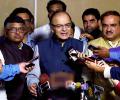
The Centre is likely to introduce the Central GST and integrated GST bills in late November or early December in the ongoing session in the form of money Bills.

Offering an olive branch to the Opposition to get the GST bill passed, Finance Minister Arun Jaitley on Thursday said that Prime Minister Narendra Modi is willing to speak to everyone to get the landmark indirect tax law through.
Modi must focus on other state-level reforms, such as those in labour laws, leasing of land and agriculture

While the government has the option of ensuring the passage of these Bills as money Bills, there are voices within the government advising discretion on the GST roll-out by April 1.

Senior leaders within the Congress now say the party could accommodate the government's argument that the GST rate cannot be stipulated within the Constitution.

The finance minister is "reasonably confident" that when it comes to the crunch, "it would be extremely difficult even for the Congress party to take a contrarian view" on the GST Bill.

Leader of Opposition in the Rajya Sabha Gulam Nabi Azad approached leader of the house Arun Jaitley, saying that he is accompanying Sonia Gandhi to Varanasi on Tuesday.
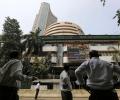
On the macroeconomic data front, PMI data on manufacturing and services sector will also influence trading
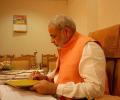
Reaching out to the opposition, Prime Minister Narendra Modi on Sunday sought its cooperation in the passage of GST bill even as it asserted that government will be targeted over developments in Arunachal Pradesh and Kashmir during Parliament's Monsoon Session starting on Monday.
The government banks on the support of the Bharatiya Janata Party to push the Insurance and LIC Bills in the next Parliament session, but it seems to have adopted different tactics on the Goods and Services Tax (GST) Bill.
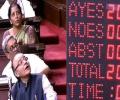
Enthused by the consensus in reaching four-tiered GST tax structure, particularly the unanimity achieved with Congress-ruled states, senior government sources were confident that the Central GST and Integrated GST Bills will be passed by both the Houses.

Following passage of the Constitution Bill, 2014, Dass and Finance Minister Himanta Biswa Sarma, who introduced it in the House, exchanged sweets.

FM said a Constitution Amendment Bill for introduction of GST will be passed soon.

The GST will replace more than a dozen levies central and state levies, including central excise duty, service tax and central sales tax as well as VAT on sale of goods and entry tax, to make movement of goods seamless across 1.3 billion market.

The Union minister said it is "not fair" on Congress's part to set conditions for the passage of the GST bill and if the said clauses were so crucial, the UPA could have brought these in the original bill when it was in power.

The Bill has already been passed by the Lok Sabha.

Finance Minister Arun Jaitley on Wednesday drove over to Rahul Gandhi's 12 Tughlak Lane bungalow to personally invite the Congress vice-president to his daughter Sonali's wedding.
The government said it was willing to advance the upcoming Parliament session.
The finance minister said the government was open to suggestions.
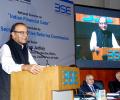
The government has proposed to implement GST from April 1, 2016, and the new Finance Commission may be set up ahead of its schedule to look into the issues related to the new indirect tax regime.

The Rajya Sabha on Wednesday took up the four bills related to the GST, with the Opposition urging the government to insulate taxpayers from harassment and questioning how the new regime was "ideal" when 40 per cent of the revenue base of the GDP was kept out of its purview.

The Goods and Services Tax Bill was passed by the Lok Sabha in May.

These have to be passed in this session to meet the September 15 deadline for switching over to the new indirect tax regime, Jaitley said.
Finance Minister Arun Jaitley appealed to parties to rise above partisan considerations to support it.
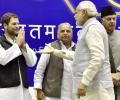
Ghulam Nabi Azad and Anand Sharma succeed in convincing Rahul Gandhi of zero returns in blocking Parliament.

Despite being cleared in the lower house, the GST bill has been pending in the Rajya Sabha for clearance, where the Congress enjoys numerical strength, reports Kavita Chowdhury.

The USIBC has encouraged a streamlined implementation of the GST.

Three laws passed in Parliament could boost central revenues, reshape GST cess flows, shift MGNREGA costs to states and create new budget headroom ahead of the 2026-2027 Union Budget, points out A K Bhattacharya.

The government introduced the 122nd Constitution amendment Bill.
"We are willing to speak to any of their leaders," Jaitley was quoted as saying by Bloomberg News.
The bill was taken up for consideration in the Lok Sabha after the Speaker rejected Opposition demands to refer the key reform measure to a parliamentary Standing Committee.

InterGlobe Aviation, the operator of IndiGo, has approached the Delhi high court seeking a refund of over Rs 900 crore it claims to have paid as Customs duty on aircraft engines and parts re-imported into India after overseas repairs. The petition came up for hearing on Friday before a bench of Justices Prathiba M Singh and Shail Jain.

The government will find it difficult to pass the Bill without the Congress's help

The government is hopeful of passage of the GST bill in the winter session of parliament claiming 30 of the 32 parties have supported it.
 © 2026 Rediff.com - Advertise with us - Disclaimer - Privacy Policy - Sitemap - Feedback - About us - Terms of use - Grievances